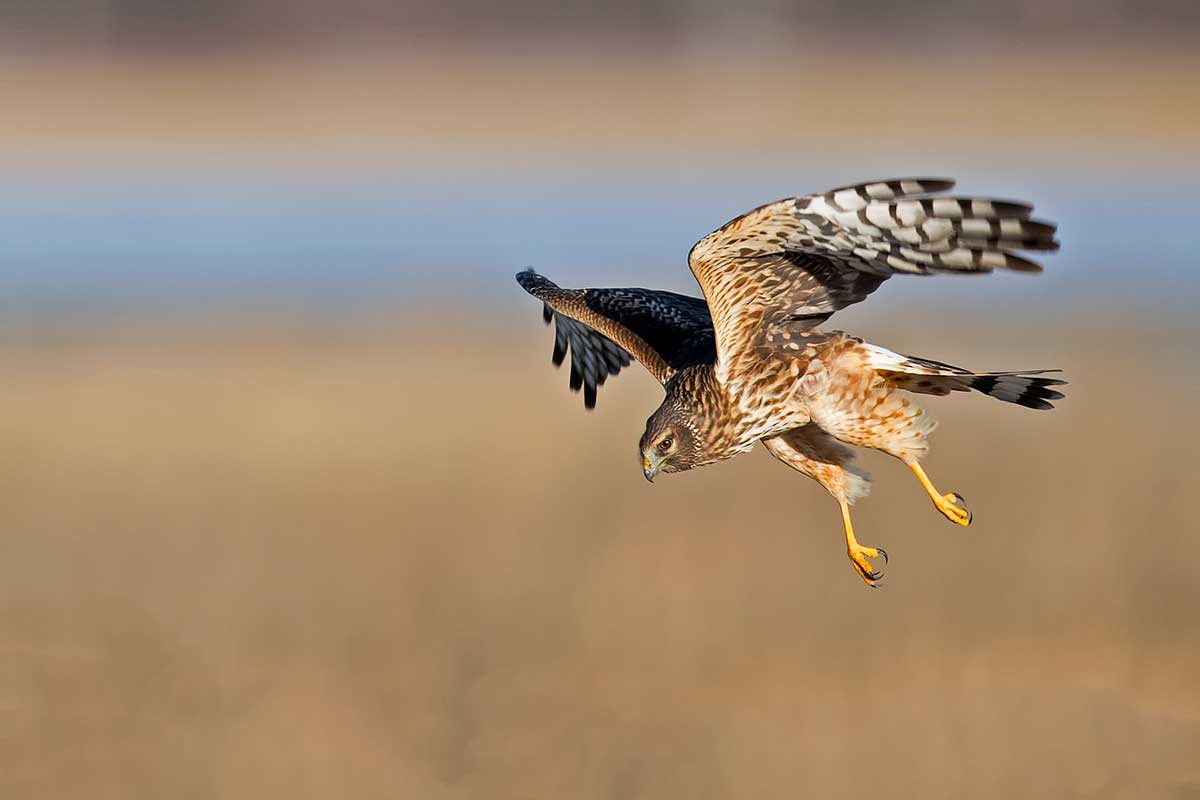
It’s always a treat to catch a glimpse of the graceful Northern Harrier (Circus hudsonius), a medium-sized hawk that calls North America’s open habitats home. Harriers’ unique field marks, including their distinctive white rump patches, their owl-like facial disks, and the striking differences between sexes (both in plumage and size) make their identification a breeze for any birder lucky enough to watch one deftly cut past on the wind. While identification may be easy, finding a Northern Harrier, especially during the breeding season, can prove to be more challenging. While officially considered “least concern” by the International Union for the Conservation of Nature, the Northern Harrier is listed as endangered, threatened, or a species of conservation concern in multiple states. In California, where there are both migratory and resident populations, the harrier is a “Species of Special Concern”, and the North American Breeding Bird Survey (2025) estimates a 1.583% annual decline in the states’ breeding population since 1966. Is the “Gray Ghost” truly becoming more of specter on our landscape?
The answer is that we don’t know. However, the Central Valley, changed greatly by intensive agriculture and urbanization, has become a patchwork of fragmented and degraded native grasslands and wetlands, the habitats harriers nest and hunt in. Data on the breeding population is especially scarce. Birders will occasionally report stumbling across a harrier nest, and researchers studying nesting ducks find them as well. While reviewing the literature, I was only able to find one comprehensive report of nests across the valley; the report, written by Daniel Loughman and M. Robert McLandress (California Waterfowl Association), summarized harrier nests found from 1987 to 1992. A lot has changed in the valley since the 90s and presumably the harrier breeding population has as well.
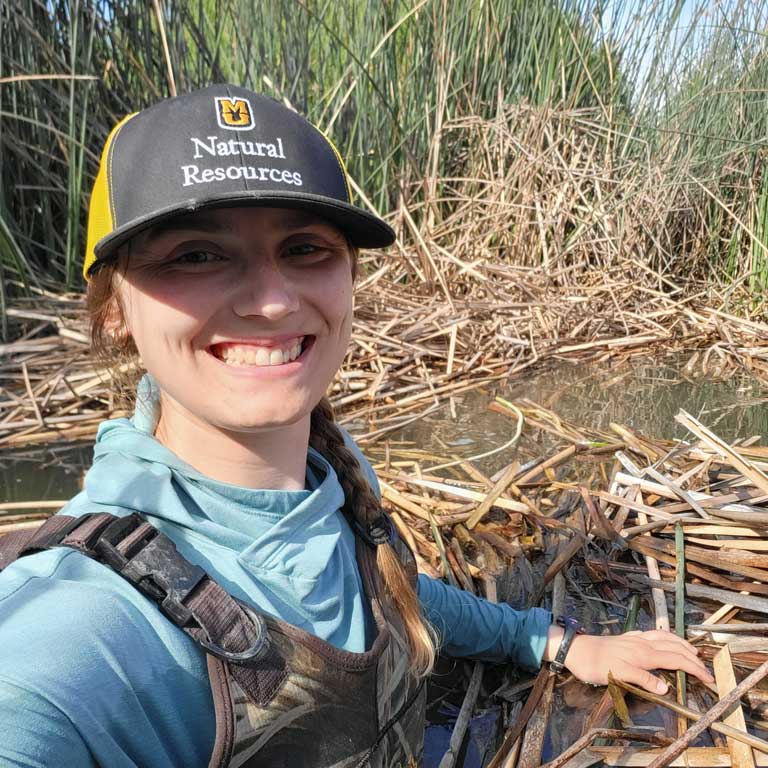
More recently, Dr. Shannon Skalos studied the nesting ecology of harriers at Suisun Marsh for her doctorate work. Inspired to learn more about harriers in California, she wrote a state wildlife grant with my advisor (Dr. Michael Byrne, University of Missouri) to study harriers across a larger region of the state. As the graduate student hired for this project, I am tasked with getting to know these birds intimately. My role is to investigative the distribution and approximate size of the breeding population in the Sacramento Valley and Yolo-Delta regions, roughly from Willows down to Galt. Specifically, I am interested in the habitats these birds are using to nest, and how features of their habitat influence their nest-site selection and nest success. This project will provide baseline data for future research and management of Northern Harriers in California and will add to our knowledge of this species’ nesting ecology across their range. It also provides a unique opportunity to spend a lot of time observing these goofy, yet stunning birds.
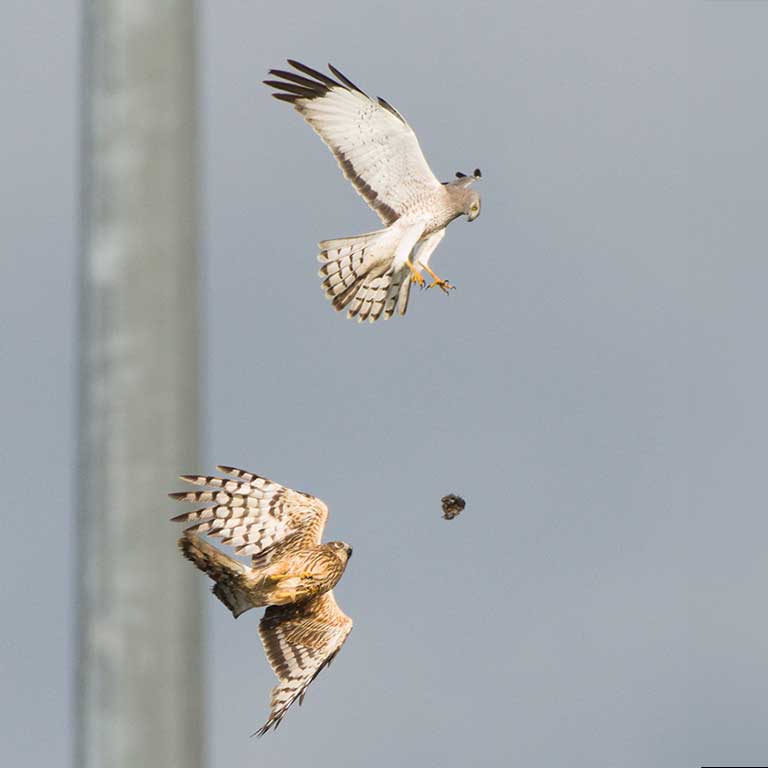
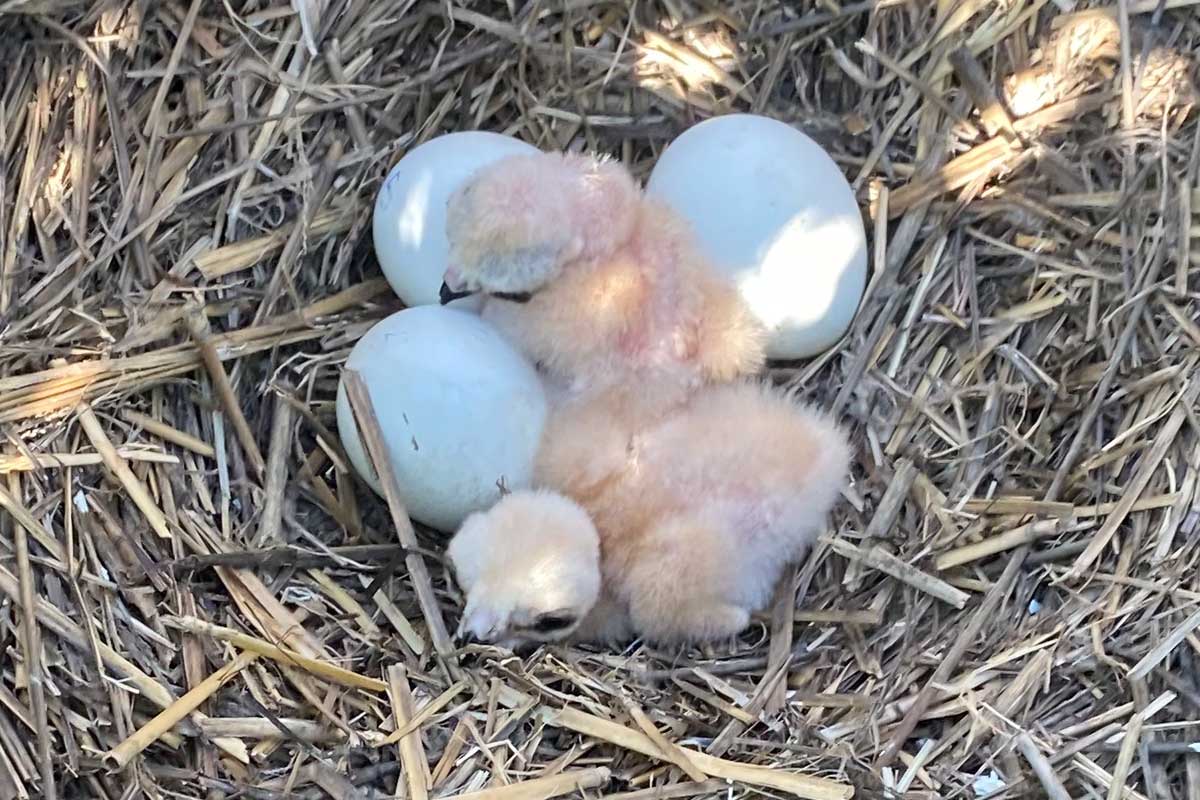
Over the course of two summers, my team and I are surveying the valley to find and monitor as many harrier nests as possible. To minimize disturbance, our work is hands-off; to find nests we rely on the birds’ behavior to tell us what they are up to and we watch them from a distance. Male harriers perform elaborate “skydancing” courtship displays in early spring, and pairs complete impressive mid-air food passes throughout the season. By spending many hours watching our pairs, we can figure out where their nests are, and we continue our observation until they fail, or more hopefully, fledge. As a ground-nesting bird, nest failure is common. Last year (2025) only 4 out of 14 monitored harrier nests successfully fledged young. Harriers combat the risk of nesting on the ground by having large clutches; they average 4-5 eggs but can have 7 or more. Once we determine the final fate of each nest, we measure different aspects of the vegetation/habitat and compare it to that of nearby available, but unused locations. By statistically analyzing this used versus available data, I will be able to provide managers with harrier nesting habitat requirements that they can implement in their land management plans.
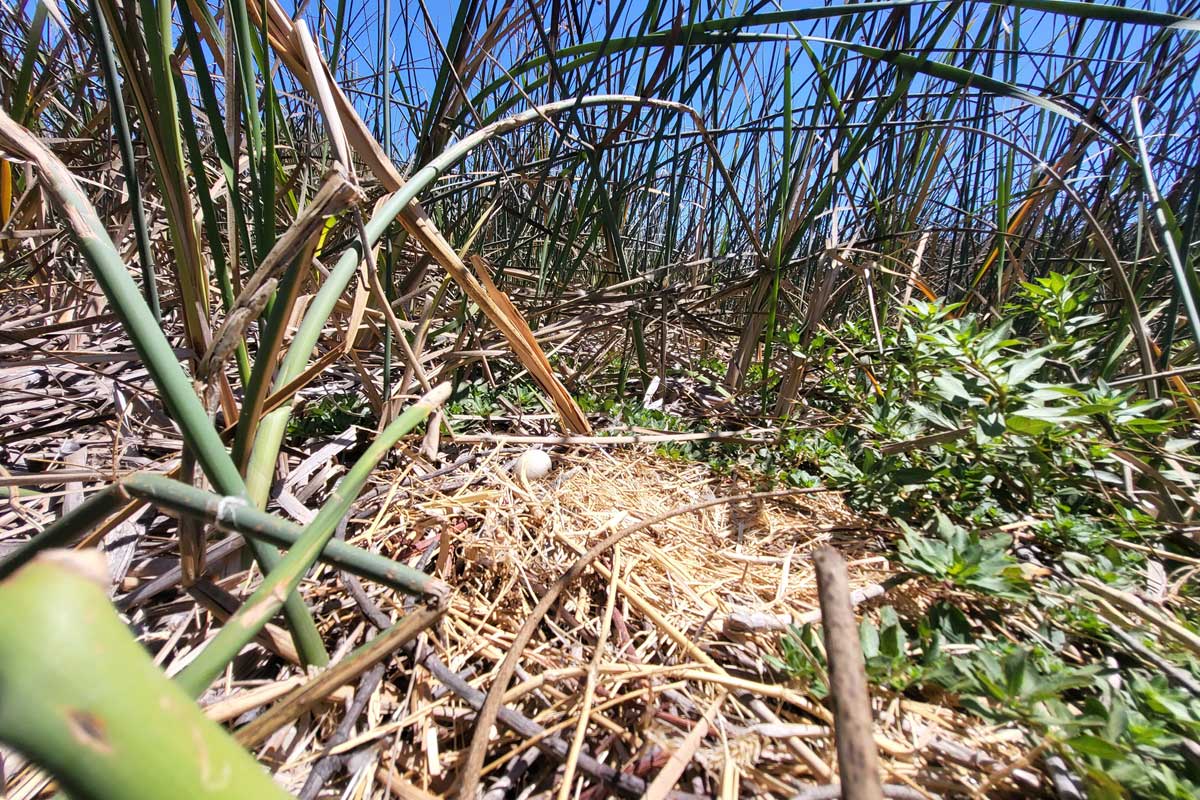
The 2026 nesting season is off to a great start; our team has already identified 30 harrier nesting territories, and it is likely we will find more as the season progresses. Last winter’s rain, paired with early warm temperatures, has caused vegetation to grow thick and tall, which is what the harriers prefer. They place their nests in both upland and wetland sites in native grasses, introduced scrubby herbaceous species (e.g. mustard), and emergent vegetation (e.g. tule and cattails). We have evidence to suggest that they are also using agricultural fields, specifically grains such as wheat. Anecdotally, it appears to be a decent year for the small rodent population as well; previous research has demonstrated that harrier breeding aligns with the boom and bust cycles of their main breeding season food source. I’ve heard small rodents crunching vegetation next to me while doing nest observations, and we have evidence of polygyny (one male paired with multiple females) at several sites which is thought to occur when an adequate prey base is available. Only time will tell how successful the harriers are this year, but I’m excited to follow along and find out what happens.
If you happen to find/know about a Northern Harrier nest in the valley, please let her know at gccft@umsystem.edu. You can also follow along on her fieldwork adventures and find more harrier photos on her Instagram (@sagebrushchick_photo).